
Many traditional Martial Arts have a requirement to practice forms. These forms, also known as Katas or Patterns, are a set of moves practiced alone. They involve performing a set of movements consisting of small sequences. These include, punches, kicks, blocks, footwork and breathing techniques, aimed to carefully perfect martial arts techniques.
Other Martial Arts
Most forms performed in Karate, Taekwondo and Kung Fu have the same movements performed on the left side and the right side at some point during the form. An example would be a side kick is performed with the left leg and the right leg.
In Tai Chi there is a peculiarity in that several moves within the forms are only performed on one side and not the other. I have practiced several versions of the Yang style long and short form and many of the moves I can confirm are only practiced on one side.
Examples of the most obvious moves that are only performed on one side are:
- Single Whip and preceding sequence
- White Crane Spreads it’s Wings
- Snake Creeps Down
- Punch Under Elbow
- Needles at Sea Bottom
- Turn Body to Sweep Lotus
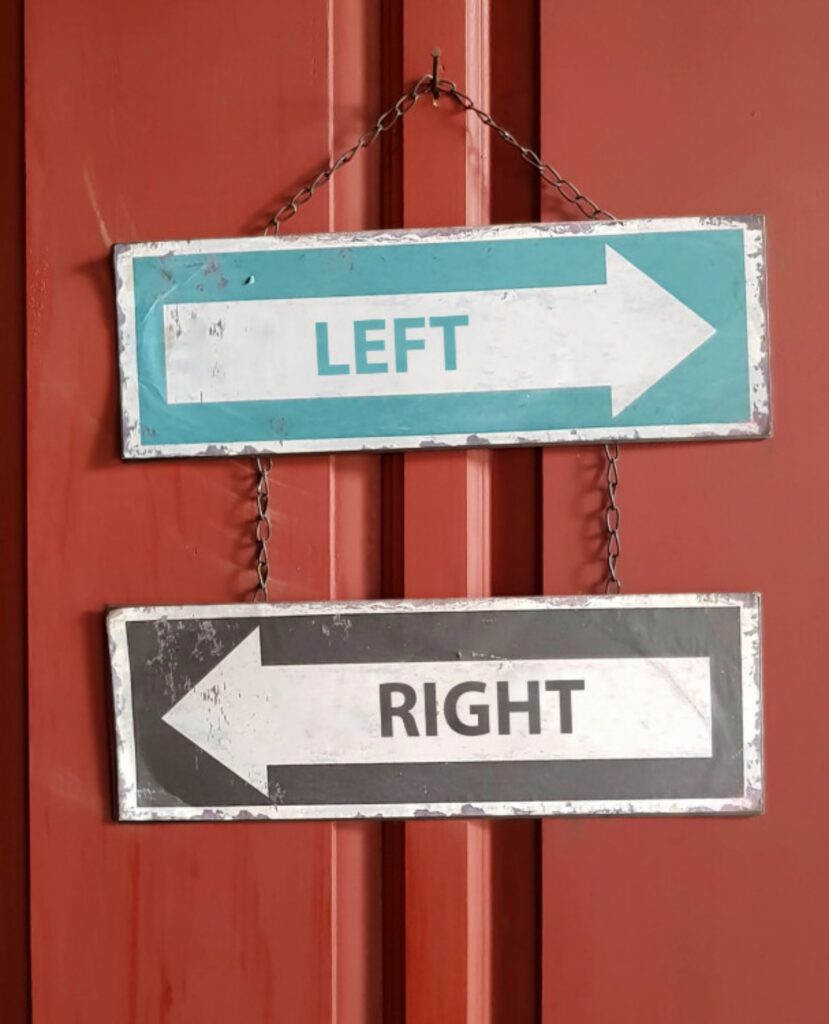
So why are they only performed on one side ?
Many Tai Chi Instructors practice and encourage their students to practice the form on both sides although traditionally it is not done this way.
Tai Chi is more of a traditional internal Martial Art involving the movement of Chi energy around the body as in Chi Kung. There is a theory that because the human body is not symmetrical on both sides then certain Tai Chi moves do not have to be performed on both sides. Although a Chi Kung routine is normally practiced on both sides.
The following link is an interesting conversation in a Martial Arts forum www.martialartsplanet.com The conversation discusses theories on Chi Kung, the benefit of learning the form on both sides and also mentions how confusing it can be.
Another interesting discussion on the Yang Family Tai Chi Discussion Board
Cheng Man Ching’s explanation
I have found a good article on the subject by William Phillips of the Patience Tai Chi Association. Here is an excerpt from his article which mentions Cheng Man Ching’s explanation:
“Professor said that, for example, Single Whip, as it is performed in his form, is designed to open the lung meridian. However, when performed from the other side, with the left arm outstretched to the side, it closes the meridian. I do not know the meridians or how they function, so I cannot confirm this, but he was also a doctor of Traditional Chinese Medicine, and so he knew what he was talking about.”
Here is a link to the article
Physical Symmetry
I have found this article by Nicola of Earth Balance Tai Chi. She describes how because of her ailments she has stopped practicing Tai Chi on only one side.
Here is a link to the article

Conclusion
Is there really a conclusion. In my view the jury are still out on this topic. It could be the case that:
- The form is only taught on one side for simplicity, not to confuse people.
- It is taught on one side because of the flow of Chi and the meridians internally are not symmetrical.
- It is based on most people being right handed. If you are left handed then it should be performed the other way round.
I will update the post if I find anything conclusive in the future. Comments welcome.
After practicing a version of the long Yang form on the traditional side, for the about the last four months, I have started to practice this form of the other side, too. Being left-handed, I have always felt that Tai Chi was invented by right-handed people in a conservative society that frowns upon left-handed folks. So far, it has been a difficult, incredibly confusing journey as I have not only mixed up the form itself but the traditional side has at times bled into the left-side form. At first, it felt insanely awkward, but gradually, I have become more fluid. I feel practicing the form on both sides is incredibly beneficial for my brain, overall equilibrium, and for my back. I am very close to having learned the entire form on the nontraditional side. There were times when the learning process became so frustrating that I was about to throw in the towel. Now I am glad I stuck it out.
Hi Tom, It’s good to get feedback on other peoples experiences. Thank you
Hooray
I’m left-handed and practicing the traditional Yang style.
My sifu has always valued my commitment more than my mistakes and this has helped a lot in progression.
From time to time we practiced the first part of the long form to the opposite side.
My sifu considered it important to train the brain in reverse after the routines and automatisms have been acquired.
What was easy to me seemed like a puzzle to my colleagues.
My sifu always said that this mess was my “day to day” and I never complained.
Greetings.