
When I started Taekwondo in the 1980’s with the United Kingdom Taekwondo Association (UKTA) breaking boards in colour belt junior gradings was a big thing. You had to break a wood or plastic board to pass any grading from, as far as I recall, Green Belt. Black Belts were required to break house bricks.
Breaking Boards
Breaking boards is considered a necessary part of Taekwondo as much as being able to deliver a good variety of kicks. So since the 1980’s how has Taekwondo and breaking boards progressed, or not progressed with the introduction of Health and Safety and protecting your body from harm. I was one to take part in the fun My Story
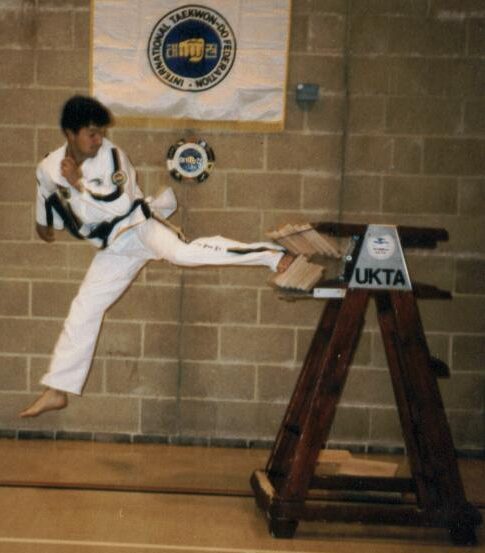
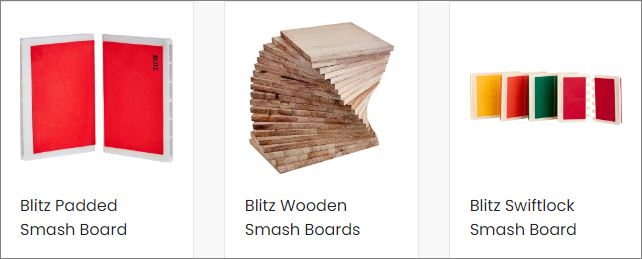
A white plastic breaking board is the easiest to break, about the same as breaking a piece of pine or similar. The plastic board has a join half way through to allow it to break under force. They measure about 20-30cm square and 1-2cm thick. Two students hold it in place in a solid grounded stance whilst you would break it with a punch or knife hand strike. As you progress through the grades red breaking boards were introduced which are harder to break. The problem is different boards are easier than others, older boards are more worn and easier to break so at a grading you would hope the instructor would pick the easy board. Red boards are placed into a wooden or metal stand to hold the board firmly in place. When a student became a Blue or Red Belt, almost Black, then he would often be required to break two red boards at once.
Blitzsport have breaking boards for sale on the below link
Children under 16 years would also have to break boards although they were not expected to perform as well as an adult. I often saw small children crying at gradings because they were unable to break, although they may have still passed.
This was the way breaking took place with the UKTA. The UKTA were affiliated to the International Taekwondo Federation (ITF). The other international governing body was the World Taekwondo Federation (WTF). The WTF did things differently, they’re kicking style, patterns and equipment were not the same as the ITF so I have no knowledge of their practices.
Breaking Bricks
During the 1990’s many clubs and associations were making breaking optional for coloured belts and Black Belts. For some it was only required for Black Belt gradings and demonstrations.
It is now 2021 and Taekwondo has grown and split into many different clubs and associations. After some research I have found that many continue to perform breaking techniques. Some continuing to introduce it for Black Belt gradings and demonstrations only. Some have their Black Belt 1st Dan Grading as “Power Test” which would normally mean breaking but this could be demonstrating techniques against a pads.
Many Associations and clubs still require students to break
Clubs affiliated to the UKTA and ITF continue to require breaking techniques in gradings from Green belt and the breaking of a house brick for 1st Dan Black Belt. Students under 16 do not require to perform breaking. Although some clubs may vary so please don’t quote me.
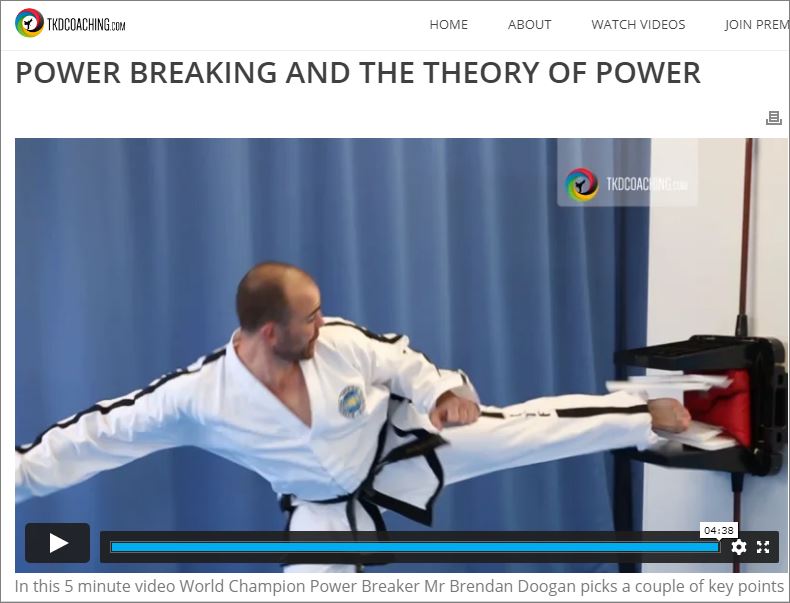
In my opinion it is good that traditionally Taekwondo continues to expect that a student should be able to perform techniques to such a high standard that they are able to bring all the theories of power into practice. The below link by World Champion Power Breaker Mr Brendan Doogan contains an excellent explanation. He is demonstrating against a single break board
If you are placing so much power into a kick and you miss the board you risk damaging your bare foot against a metal or wooden frame. Some clubs allow students to wear Taekwondo shoes for breaking.

To conclude – breaking does not always go as planned
Leave a Reply